
Unpaid fees are the biggest money problem most private schools in Nigeria face. A school can look full and still struggle to pay salaries because 20 or 30 percent of fees arrive late, in bits, or not at all.
The good news is that most late payment is not refusal. It is confusion about the amount, inconvenience, or a parent juggling bills who pays whoever chases hardest. Fix those, and the number of defaulters drops sharply.
1. Send a clear, itemised bill to every parent
Parents delay when they are not sure what they owe. "School fees: ₦185,000" invites questions. An itemised bill (tuition, books, PTA levy, excursion, sibling discount) answers them before they are asked.
- Bill every class at once from a fee structure, so no child is missed.
- Show previous balances clearly, separate from this term’s fees.
- Give every bill a reference so payments can be matched without guesswork.
2. Make paying easy
Every extra step loses a payment. If a parent has to travel to the bank, queue, then bring the teller to school, many will put it off.
Offer at least two ways to pay: online (card, bank transfer or USSD) and bank deposit. With an online gateway such as Paystack, the money can settle straight into the school’s own bank account and the parent gets a receipt immediately. Read how online school fee collection works for the details.
3. Record bank tellers the same day
When parents pay at the bank, the bursar needs to confirm the deposit against the bank statement before marking the bill paid. Do it daily, not at the end of the month. A parent who paid on Monday and still sees "owing" on Friday loses trust and starts ignoring reminders.
4. Know exactly who owes, today
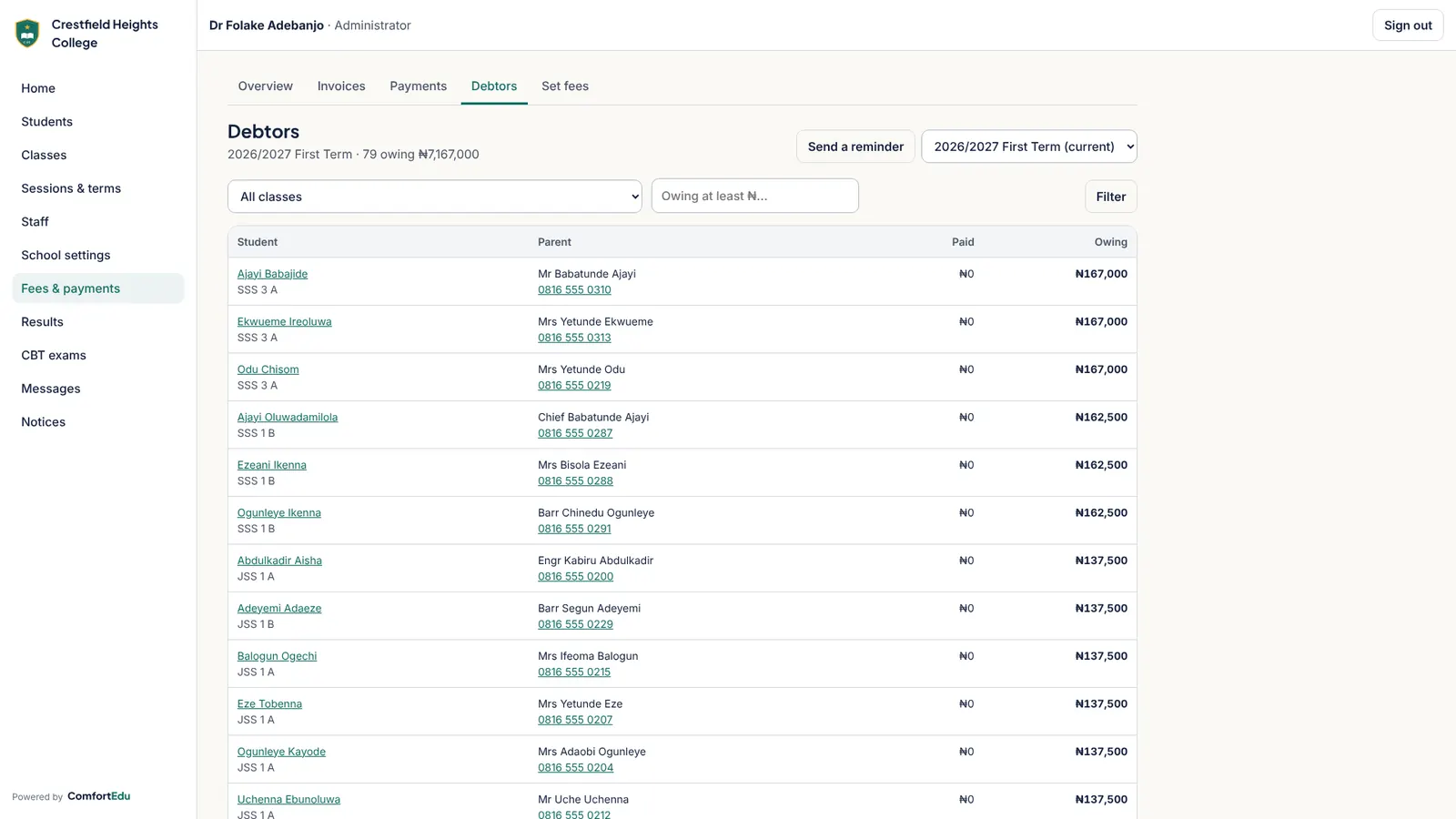
You cannot follow up what you cannot see. A good debtors list shows, for every student who owes: the amount, the class, and the parent’s phone number. It should update the moment a payment is confirmed, so you never chase a parent who has already paid.
5. Remind politely, personally and only those who owe
A mass "Pay your fees" message to every parent offends those who have paid. Instead, send a personal message only to parents with a balance:
"Dear Mrs Okafor, this is a gentle reminder that Chidinma’s First Term balance of ₦61,000 is due. You can pay online with the link in your portal or at the bursary. Thank you."
Name, child, amount and an easy way to pay. Send one when bills go out, one around mid-term, and one a week before exams. SMS reaches every phone; WhatsApp and email are cheaper extras for parents who use them.
6. Have a fair, written policy for results and exams
Many schools hold back report cards or exam access until fees are cleared. If you do this:
- Put it in writing at admission and remind parents before exams.
- Set a clear threshold and date, for example "balances above ₦20,000 after week 8".
- Apply it automatically and the same way to every family, so no one feels singled out.
- Never shame a child in front of others.
7. Thank parents who pay
An automatic "Payment received, thank you" message costs almost nothing and reassures parents that their money arrived. It also stops "Did you get my transfer?" calls to the bursary.
How ComfortEdu helps
ComfortEdu does all seven steps in one place: itemised bills for every class, Paystack payments straight to your bank, a teller approval queue, a live debtors list with parents’ phone numbers, personalised reminders to parents who owe, an optional result lockdown with your own threshold, and automatic receipts. See the fees features or book a free demo.
Common questions
Is it legal to withhold a child’s result for unpaid fees in Nigeria?
Many private schools state in their admission terms that results may be withheld until fees are cleared. Whatever your policy, write it down, tell parents at admission and before exams, and apply it the same way to everyone. Never send a child home in a way that shames them.
How often should a school send fee reminders?
A good rhythm is one reminder when bills go out, one around mid-term, and one a week before exams, sent only to parents who still owe. More than that tends to annoy parents who are already planning to pay.